Elmwood Stock Farm, Georgetown KY, USA || Weekly subscriptions available now! Details here.

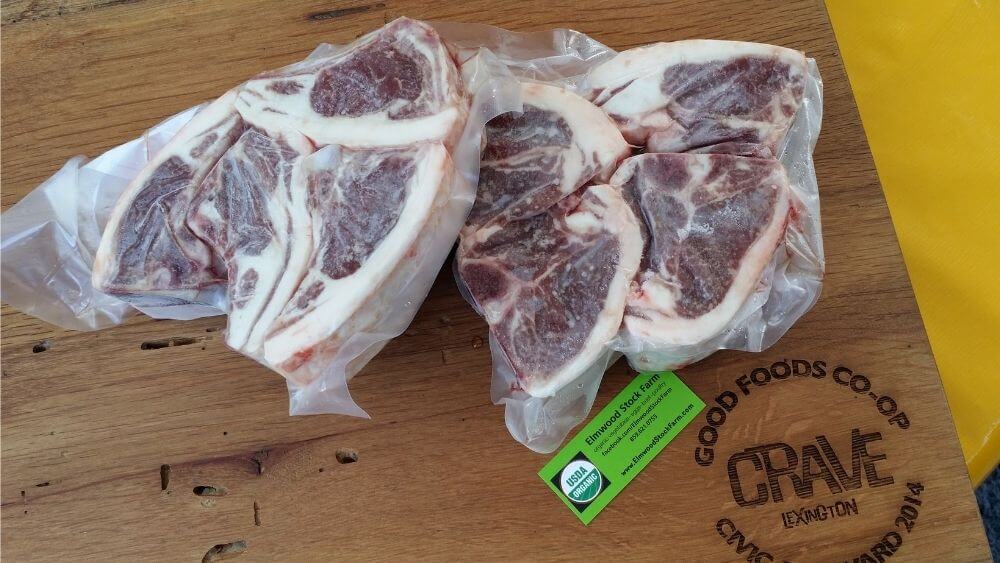
There exists this trope that organic, grass-fed, grass-finished beef can be leaner, drier, and more difficult to prepare.
But that depends entirely on how the cattle are raised and grazed.
The main difference between Elmwood Stock Farm grass-fed, grass-finished beef and others is in the USDA grade. On the five-level USDA grading scale, three grades are most commonly labeled to sell to people (in order from most flavorful and tender to least):

Elmwood Stock Farm strives for beef cuts graded Choice or better. Many other grass-fed beef brands consistently grade Select. We’re not bragging – this is an important distinction! Elmwood beef has more flavor, tenderness and moisture than you might expect.
Mac explains, “John ‘finishes’ our beef on grass; no grains needed. We know the cattle are doing well when they have that bloom—a shiny coat and healthy look—which is an indicator of intramuscular fat (marbling) and fat cover.”
This grass finishing took some time to work out, and we’re still learning new ways to produce the best beef we can. The right mix of forages and the right breeding program that allows animals to thrive on forages is more difficult to nail down than turning out cattle on a pasture and calling the beef “grass fed.”

John explains, “Different forages provide high energy at different times of the year. To raise cattle on forages requires a lot of planning. It also results in less consistent year-round supply of the forage, so it’s harder to have a consistent year-round supply of our beef,”
On our end, we work hard so you aren’t so impacted by the supply ups and downs.
“If the beef is lean, it is often dry and more likely to be tough. Intramuscular fat adds moisture and flavor within the meat and can reduce the connective strength between muscle fibers, thus the meat is more likely to be tender,” he continues.
As Mac often says, producing heart-healthy, environmentally conscious meat this way is simple, but it isn’t easy. You all (and our farmers) want to eat Choice grade grass-fed beef, so we produce Choice-grade grass-fed beef.
“We are determined to not compromise the quality of the beef just so we can call it ‘grass-fed,’” John says. “And since it is forage fed and finished, it has a fat profile that is not only not bad for you but actually good for you. And since the cattle are grazed in a manner that at times resembles how bison herds migrated while grazing across this area centuries ago, our beef production builds soil, sequesters carbon, and contributes to climate remediation.”

John says Elmwood Stock Farm meats—steaks, in particular—have a deeper or richer flavor.
Part of the flavor difference comes from the varied forage diet. “The forages perform differently when consumed by the same animal depending on the time of year and stage of growth of the plant. Plus, the cattle do sometimes graze annual plants and seasonally varying weeds,” says John.
Mac explains, “the fat on grass-fed beef has a yellowish tint, imparted from the beta-carotene in the grass.”
This varied diet, as opposed to one of grains and dry or fermented forage, adds complexity to the beef flavor profile.
“I don’t think cooking Elmwood beef is any different cooking than any other Choice grade beef, it only brings more flavor,” says Mac.

If you’re not so sure where to begin in cooking Elmwood Stock Farm beef, try these recommendations:
Foolproof Method for Really Experiencing Grass-Fed Beef.
Looking for more guidance? Let Mac be your grass-fed, grass-finished beef concierge! Contact us, and we’ll answer all of your beef cooking questions.